“2000 meters” search results (900)

What are the characteristics of African coffee beans? introduction to the species of African beans
. Colombia is the world's second largest coffee producer after Brazil. Is the leader in the country that produces Colombian mild. The name of origin has become a well-known name for coffee, such as Medning, Manizarez, Bogota, Almenia and so on. Coffee beans are light green and large-grained, according to their unique thick flavor, whether pure coffee or mixed
2016-06-06 Africa coffee beans what characteristics types introduction Colombia second only to Brazil
Bolivian coffee grown in Yongas, northeast of La Paz
Arabica coffee cannot be grown in cold places above 2000 meters above sea level. if the altitude is too high, coffee trees will frost because the temperature is too low. So Bolivian coffee is mainly grown in the Yungas region northeast of La Paz. It borders the Amazon basin and is about 1500-2500 meters above sea level with an average annual temperature of about 10-15 ℃. Therefore, it ensures the growth of coffee.
2016-06-30 Planting La Paz Northeast Garth Bolivia Coffee Rabbi No
Colombian coffee growing environment
The suitable climate in Colombia provides a real natural pasture for coffee. Coffee trees in Colombia are mainly cultivated in the Andes, on steep slopes about 1300 meters above sea level, where the annual temperature is about 18 degrees Celsius, annual rainfall is 2000 to 3000 millimeters, latitude 1-11 15 north, longitude 72-78 west, and the specific range of elevation can exceed 2.000 meters. By
2016-05-31 Colombia coffee planting environment suitable climate available
Colombian coffee growing environment
The suitable climate in Colombia provides a real natural pasture for coffee. Coffee trees in Colombia are mainly cultivated in the Andes, on steep slopes about 1300 meters above sea level, where the annual temperature is about 18 degrees Celsius, annual rainfall is 2000 to 3000 millimeters, latitude 1-11 15 north, longitude 72-78 west, and the specific range of elevation can exceed 2.000 meters. By
2016-06-02 Colombia coffee planting environment suitable climate available
Fragrant but not strong, slightly fruity Yunnan Tieka coffee flavor taste manor characteristics of varieties
The western and southern parts of Yunnan Province are located between the 15th latitude and the Tropic of Cancer. Most areas are 1000-2000 meters above sea level. The topography is dominated by mountains and slopes. Here, the land is fertile, the sunshine is sufficient, the rainfall is abundant, and the temperature difference between day and night is large. The unique natural conditions form the special taste of Yunnan small-grain coffee, which is rich but not bitter, fragrant but not strong, slightly fruity. Pu'er in the south and west of Yunnan
2016-09-12 Not strong slightly fruity Yunnan pickup coffee flavor taste manor producing area
Indonesian coffee Indonesian boutique coffee
The growth environment of boutique coffee beans also has higher requirements. Generally grow at an altitude of 1500 meters or even more than 2000 meters above sea level, with appropriate precipitation, sunshine, temperature and soil conditions. Some world-famous coffee beans also have a special geographical environment, such as the alpine clouds in the Blue Mountains, the free shade provided by the afternoon clouds in Kona, and the volcanic ash soil in Antigua.
2016-05-23 Indonesia coffee boutique coffee beans growth environment also have
Introduction to the characteristics of Bolivian Coffee Flavor and Taste Manor
Arabica coffee cannot be grown in cold places above 2000 meters above sea level. if the altitude is too high, coffee trees will frost because the temperature is too low. So Bolivian coffee is mainly grown in the Yungas region northeast of La Paz. It borders the Amazon basin and is about 1500-2500 meters above sea level with an average annual temperature of about 10-15 ℃. Therefore, it ensures the growth of coffee.
2016-07-25 Bolivia coffee flavor taste manor producing area characteristics introduction coffee beans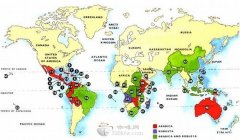
Coffee beans grow at the center of the equator
Coffee beans grow in tropical or subtropical agricultural gardens around the equator, called coffee belts, and travel to Japan with ships. When the brown coffee beans appear in front of your eyes, they have actually gone through a variety of different circulation processes and the hands of many people.
2014-08-19 Coffee knowledge coffee bean growth coffee belt equatorial growth
Guatemala coffee northern estate production introduction pico tenango highland production Hasenda coffee garden
Vivit South Fruit Production Area is located in the northwest highlands of Guatemala, with an altitude of 1800-2100 meters. It is the highest coffee production area in the country and is famous for producing excellent quality beans. Due to the large number of rivers and lakes in Guatemala, the Vivitenango region is rich in mountains and water resources, the climate is dry but the water supply is abundant, and the water conservancy facilities in the region are complete, so coffee is mostly washed and added.
2016-06-24 Guatemala Coffee North Manor Region Presentation Pico Tenan Highlands Ha
Rich and mellow, suitable for mixed drinking Honduran coffee producing area manor introduces San Juan Xido producing area
Honduras produces two kinds of coffee of very good quality, which are highly respected by coffee lovers. One is the highland coffee growing at 1000-1500 meters above sea level, and the other is the selected highland coffee growing at 1500-2000 meters above sea level, which represents the highest level in Honduras. Most of the Honduran coffee is exported to the United States and Germany. The granules of coffee beans in Honduras are more shaped than those in Honduras.
2016-06-21 Rich mellow mixed for use Honduras coffee producing area manor introduction St.
Ethiopian Coffee Boutique Flavor Manor Producing Area Taste Introduction Ethiopian Coffee Brand
1. Limu coffee grows between 1400 meters and 2000 meters above sea level. washed coffee. Excellent quality, with intense nutty aromas, moderate acidity and wine intensity. Annual production of 29,000 tons. Gima coffee grows between 1400 and 1800 meters above sea level. Sunburn coffee. Slightly sour, nutty and long finish. Annual production of 70,000 tons. 3. Gambi Coffee
2016-07-18 Ethiopia Boutique Coffee Flavor Manor Region Taste Introduction Brand
Santa Barara Manor of Honduran Coffee with rich and mellow taste
Honduras produces two kinds of coffee of very good quality, which are highly respected by coffee lovers. One is the highland coffee growing at 1000-1500 meters above sea level, and the other is the selected highland coffee growing at 1500-2000 meters above sea level, which represents the highest level in Honduras. Most of the Honduran coffee is exported to the United States and Germany. The granules of coffee beans in Honduras are more shaped than those in Honduras.
2016-07-01 Rich thick taste Honduras coffee Santa ba Lara manor
An introduction to the characteristics and attributes of Coffee in eight producing areas of Guatemala
The Ekatra Valley rises to 2000 meters (6500 feet), with dense shade and unique ecology, and the nearby Fuego volcano erupts, making its coarse, sandy soil rich in a variety of minerals. Temperate sea breezes from the Pacific and a seasonal climate allow coffee in this region to be dried by sunlight and processed according to traditional family methods that have been accumulated over the years. [characteristics
2015-03-09 Guatemala eight producing areas Coffee characteristics attributes introduction Akka Turan Mountain
Taste characteristics of Burundian Coffee Flavor description and treatment introduction of Fine Coffee in producing areas
[Bulongdi Champion processing Plant] is located at the Maerdadi Peak of the Panjia treatment Plant in Cabuye District, Cajun Province. It is very high above sea level, and even has mountains over 2000 meters. The soil is fertile, the soil is humid, and the coffee grows very well. It is generally recognized as the best coffee processing plant in Burundi. Bean parameters: country: Burundi growth: 1750 m production area: Kayanza Kabuye
2016-10-13 Burundian coffee flavor description treatment taste characteristics variety producing area boutique
Principle of siphon extraction of Chinese Coffee net in Harald producing area
At 1600 to 2400 meters above sea level, the Harald Heights in eastern Egypt is one of the highest elevation areas for human coffee cultivation (some even claim to be as high as 2000 to 2700 meters), overlooking the Yemeni ports of Mocha and Aden across the Gulf of Aden. For centuries, Harald coffee farmers used camels, donkeys or carriages to transport coffee beans to the port at the foot of the mountain, risking being besieged by hyenas.
2016-04-20 Harald Rahl producing area China Coffee siphon extraction principle hand Chong Highland
An introduction to the Vivette Nanguo Coffee producing area in the Highlands of Northwest Guatemala
Vivette Nan Fruit is located in the highlands of northwestern Guatemala, growing at an altitude of 1800-2100 meters. It is the highest coffee-producing area in the country and is famous for producing high-quality beans. Because there are many rivers and lakes in Guatemala, the Vivette Nanguo region is rich in mountains and water resources, dry climate but abundant water resources, and complete water conservancy facilities in this area, so coffee is often washed and added.
2016-06-23 Guatemala Northwest Highlands Viv Tenan Coffee producing areas introduction
Bolivian Coffee Variety producing areas introduce Yongas, northeast of La Paz
Arabica coffee cannot be grown in cold places above 2000 meters above sea level. if the altitude is too high, coffee trees will frost because the temperature is too low. So Bolivian coffee is mainly grown in the Yungas region northeast of La Paz. It borders the Amazon basin and is about 1500-2500 meters above sea level with an average annual temperature of about 10-15 ℃. Therefore, it ensures the growth of coffee.
2016-06-18 Bolivia Coffee Variety producing area introduction La Paz Northeast Garth Rabbi
Characteristics of the Eight Coffee Producing Areas in Guatemala
Time: 2014-02-10 10:18:52 Views: 3175 Views Go to www.catering.com Guatemala Guatemala's Acquatango Valley, at an altitude of 2000 meters (6500 feet), is densely shaded and ecologically unique. The volcanic eruption of nearby Fuego makes its coarse, sandy soil rich in various minerals. from the Pacific Ocean
2016-06-05 Guatemala Coffee Eight Regions Characteristics Release Time February 2014
Introduction to Columbia Premium Coffee beans
The suitable climate in Colombia provides a real natural pasture for coffee. Coffee trees in Colombia are mainly cultivated in the Andes, on steep slopes about 1300 meters above sea level, where the annual temperature is about 18 degrees Celsius, annual rainfall is 2000 to 3000 millimeters, latitude 1-11 15 north, longitude 72-78 west, and the specific range of elevation can exceed 2.000 meters. By
2016-06-30 Colombia Premium Coffee beans introduction suitable Climate Coffee Tee
Characteristics of Colombian Coffee Hope Manor Colombian Coffee Taste
Colombian coffee is famous for its boutique quality, soft taste and high taste. It all depends on the fact that the right climate in Colombia provides a real natural pasture for coffee. And the coffee varieties planted are mainly high-quality Arabica varieties. Colombian coffee trees are mainly cultivated in the Andes, on steep slopes about 1300 meters above sea level.
2016-08-03 Colombia coffee characteristics manor producing area introduction hope taste